Increasing drought, erosion risks and extreme weather events pose major challenges for agriculture – especially sugar beet cultivation. Against this background, adapted cultivation systems are becoming increasingly important.
A promising approach is strip-tilling: In this case, the soil is deliberately loosened only in the seed row, while the intermediate areas remain untilled and covered by plant residues. In this way, evaporation can be reduced, water can be better retained in the soil and the soil structure can be protected.
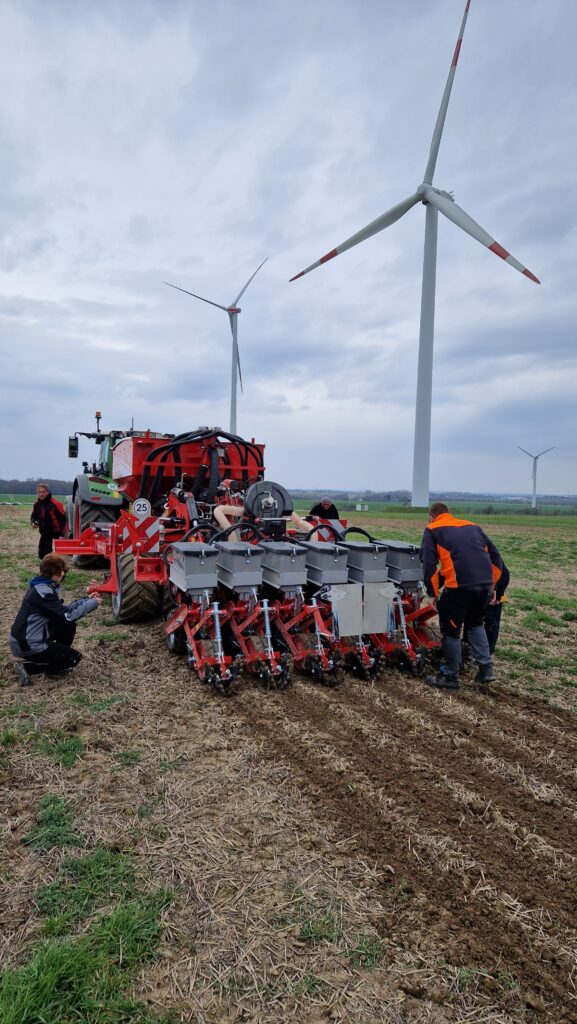
In combination with under-root fertilization and sowing in a single operation , the process offers additional potential: It can reduce the use of fuel and fertilizer, bundle operations and thus also reduce greenhouse gas emissions.
As part of the DiP-ZAZIkI project funded by the BMFTR, this cultivation system will be tested in practical farms from 2025 to 2027 and compared with the conventional method in sugar beet cultivation (mulch sowing).
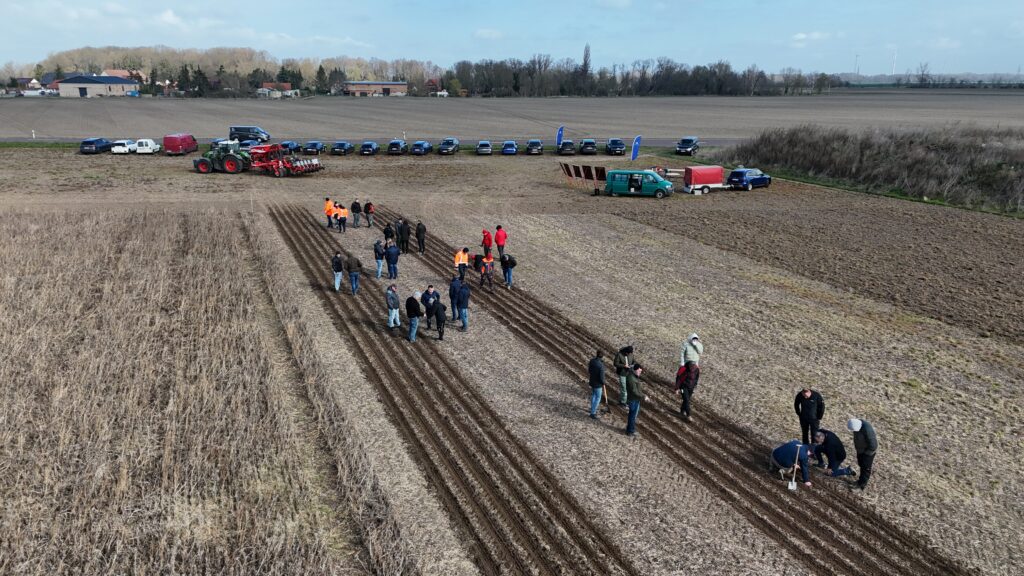
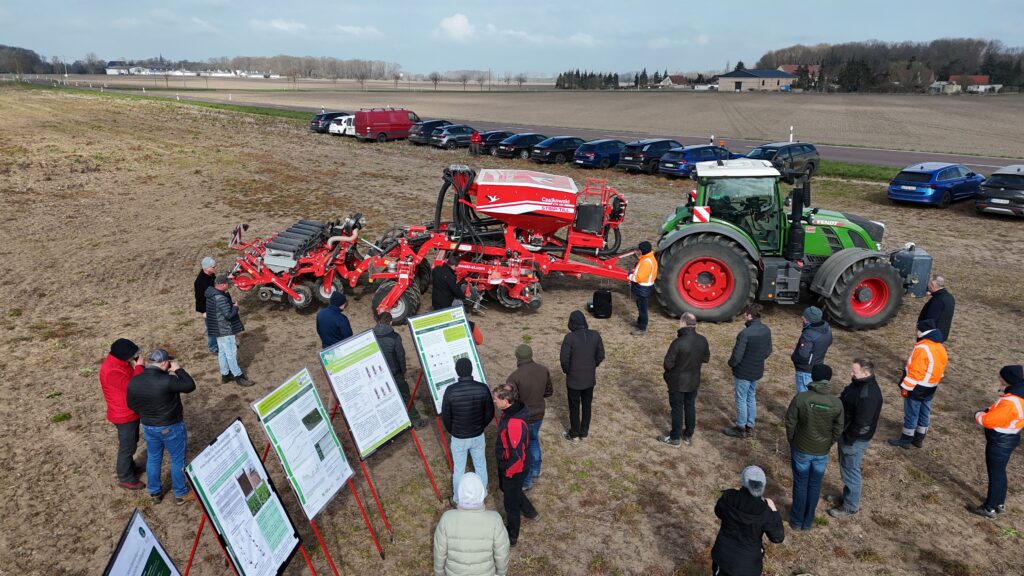
On the occasion of this year’s sowing, two field inspections took place in Saxony-Anhalt at the end of March. The process and the technology used were demonstrated on site and initial experiences from the project were presented. The programme was supplemented by technical classifications, including on plant protection.
The events offered a platform for exchange between agriculture, consulting, sales and research. At the Reupzig site, the field inspection was organised by the Institute for Sugar Beet Research gGmbH together with Pfeifer & Langen GmbH & Co. KG . The field inspections show that the combination of practical testing and scientific support is a central component in evaluating and further developing innovative cultivation systems under real conditions.
Contact: zaziki@dip-sachsen-anhalt.de