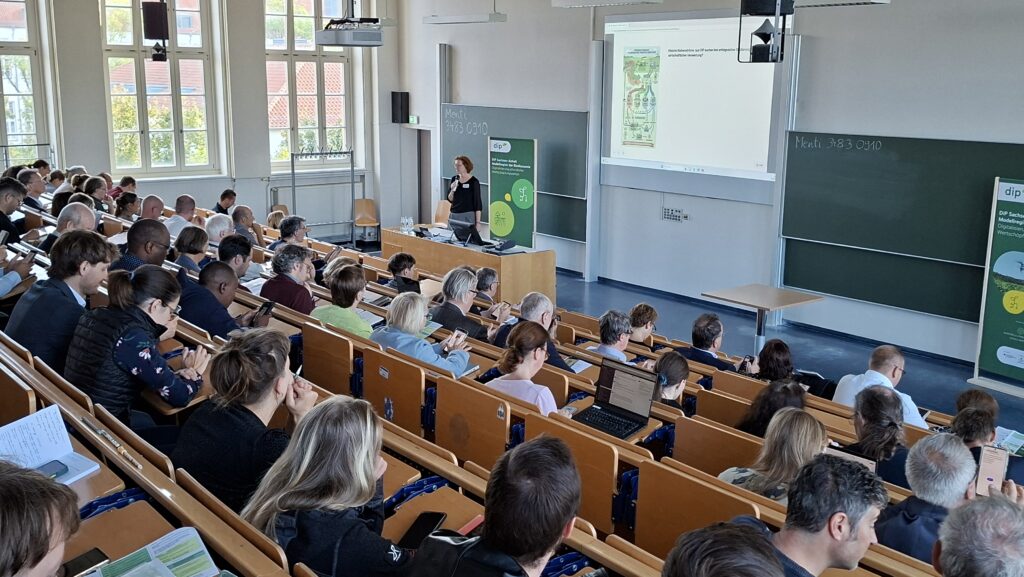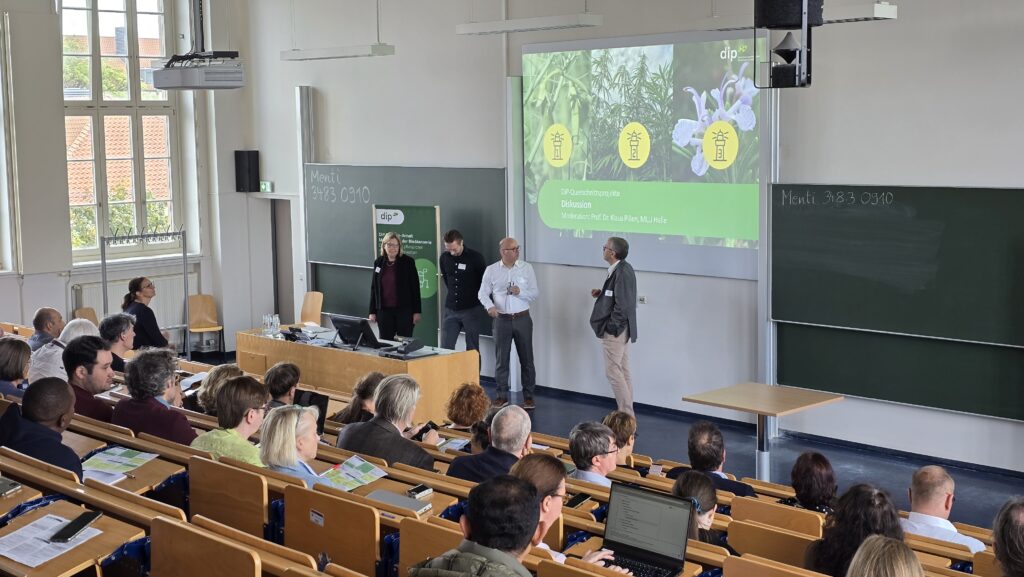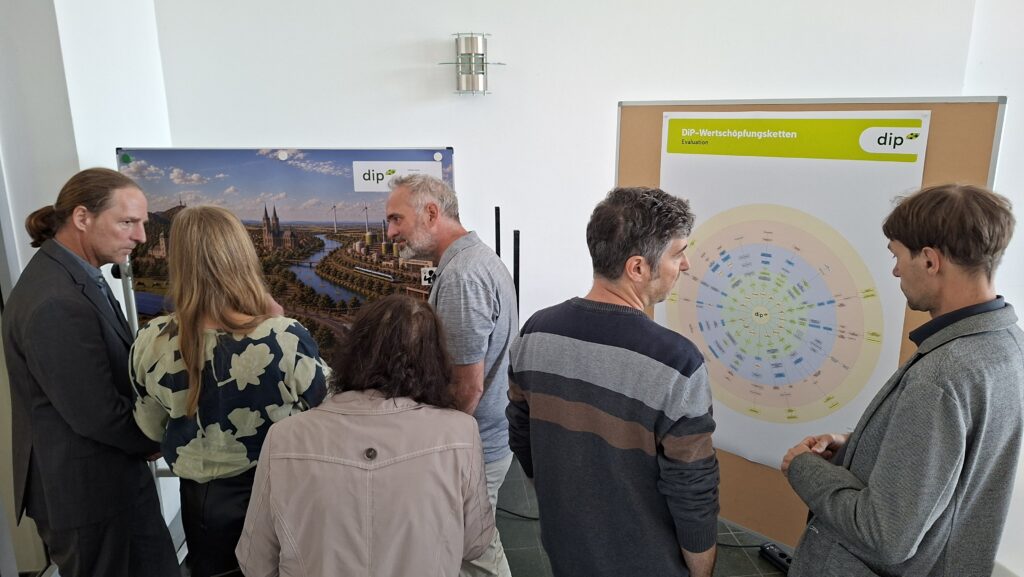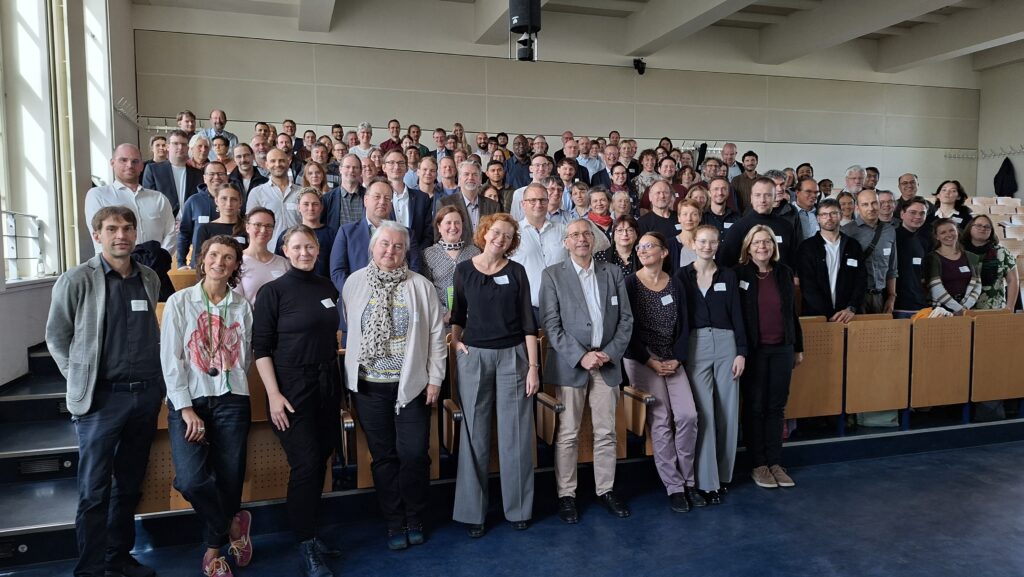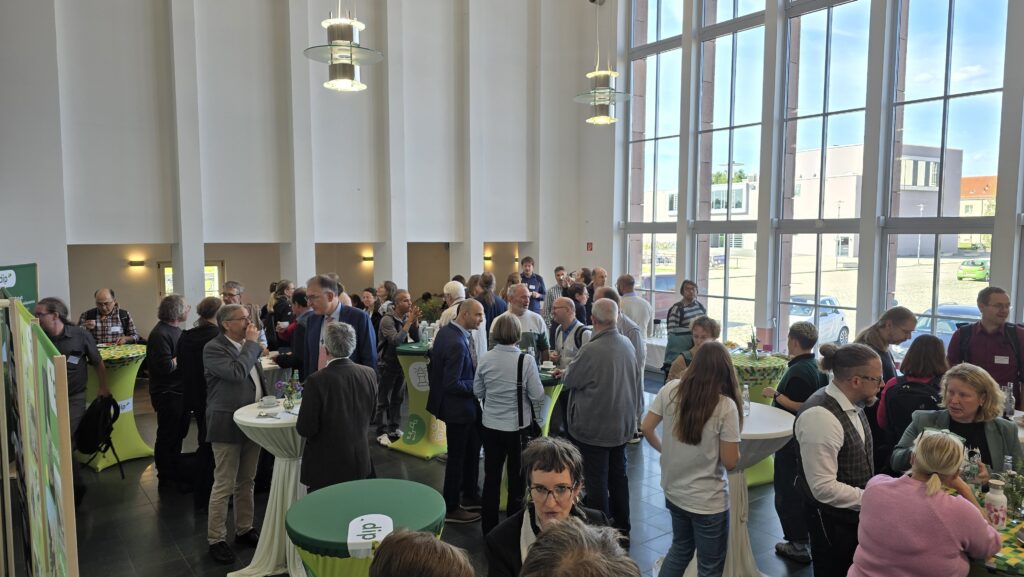
On 22 and 23 September 2026, around 140 participants came together at the Heidecampus of Martin Luther University Halle-Wittenberg for the third status seminar of the Research Association for the Digitization of Plant Value Chains (DiP). In addition to representatives of the individual DiP projects, funding agencies from the BMFTR and the state of Saxony-Anhalt as well as actors in regional economic development also accepted the invitation. The focus of this year’s conference was on further development and cooperation within the network and with the region.
Interactive workshops and new formats
In addition to the classic status reports, the program was characterized by a diverse range of workshops, which this year was largely designed directly by the DiP project partners. The sessions focused on practical questions of the future:
- Relevance and Usability of Side Streams (Fraunhofer IKTS)
- Downstream Processing in Chemical-Biotechnological Production (Fraunhofer CBP)
- Sustainability assessments using the HILCSA method of the Helmholtz Centre for Environmental Research – UFZ
- Use of AI in data-driven research (DiP-KS with DiP projects)
- Exploitation strategies in view at an early stage – how successful transfer should already be considered (TGZ Halle)
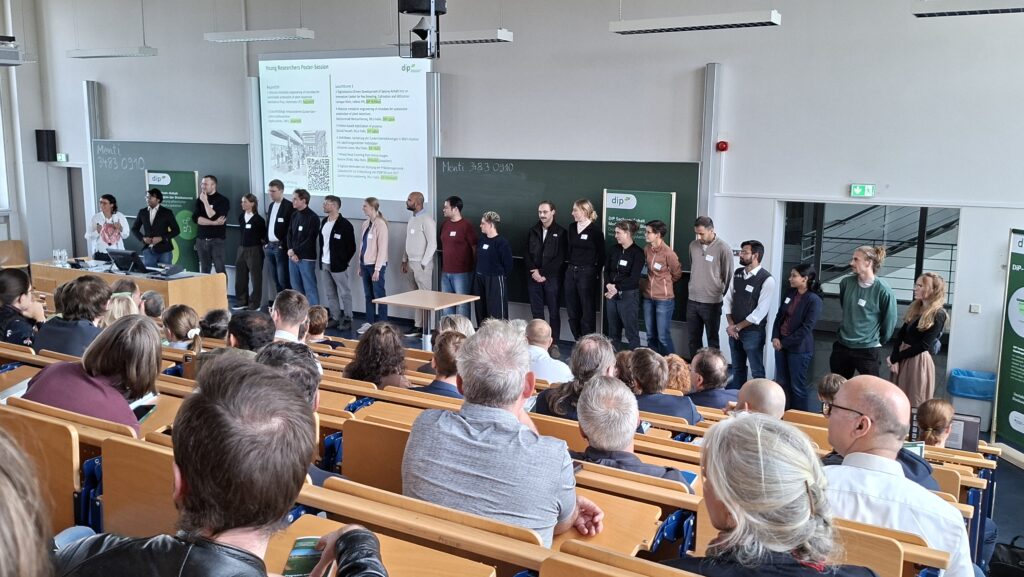
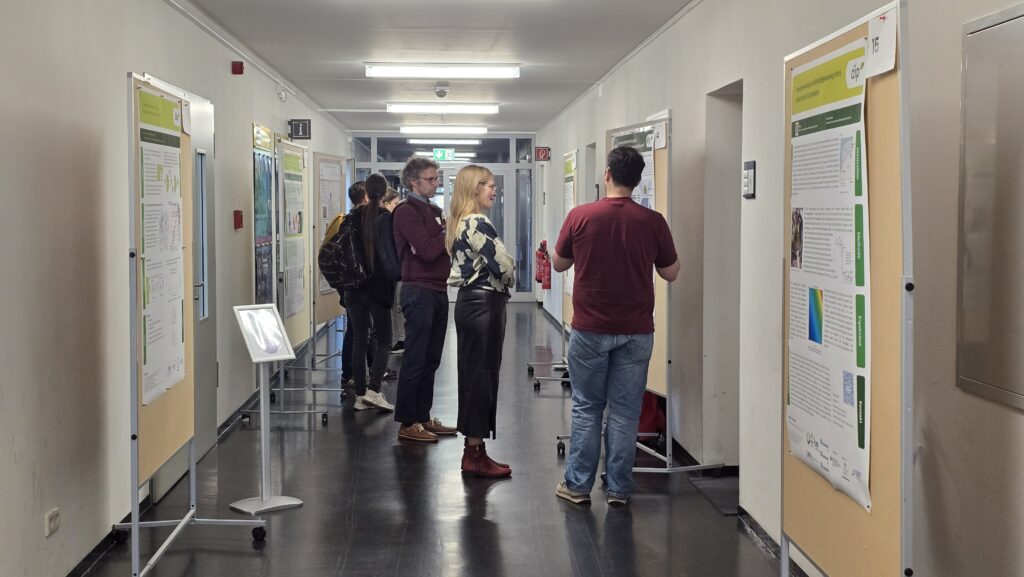
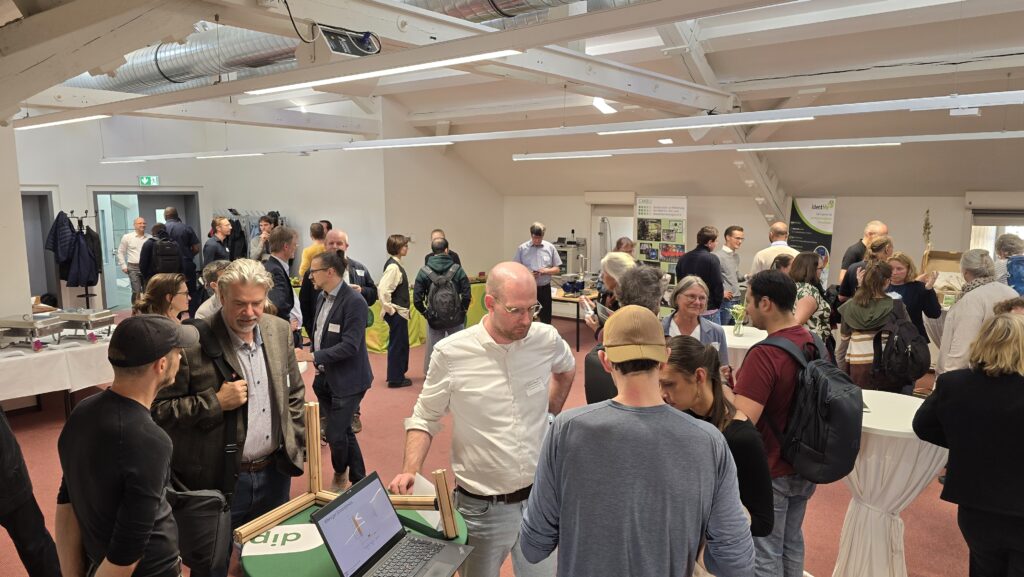
In addition, two new formats enriched this year’s status seminar: In a Young Researchers Poster Session , 20 scientific contributions from the three DiP lighthouses were presented. In the afternoon of the first day of the event, a marketplace of the business partners offered space for intensive dialogue. Here, industrial partners, several bioeconomy start-ups from the neighboring Weinberg Campus and research service providers from the DiP stakeholder circle exchanged ideas about concrete points of contact, new ideas and current needs.
Inspiring keynote on chemistry as a circular economy
A special highlight of the event was the keynote speech by DiP Advisory Board member Prof. Dr. Peter Seeberger on the second day of the event. He impressively illustrated the vision of chemistry as a circular economy. The Center for the Transformation of Chemistry (CTC), which he scientifically heads, forms a central building block for the fundamental change in the chemical industry. Since the CTC relies heavily on renewable resources in addition to recycling, numerous overlaps with the approaches of the DiP network were evident here.
Regional impulses: Shaping change together
This year, too, the “Regional Impulses” were a fixed item on the agenda with a view to thinking outside the box: Tino Haring (DiP Advisory Board and Managing Director of the Saalekreis District Development Corporation) highlighted the bioeconomy as a key component of the “Saalekreis Knowledge Transfer Region”. He cordially invited the entire DiP community to actively shape the change locally – especially with regard to the construction of the BioEconomy Hub, which was recently officially launched with the handing over of a funding decision.
Martine Ballinger from the public-private partnership Chemstars showed how the transfer of innovative laboratory approaches to the market can be optimally supported. The network, which was originally founded in North Rhine-Westphalia, is now active nationwide and supports start-ups in accelerating their development.
The 3rd DiP Status Seminar impressively showed: The approaches and innovations from the DiP projects are increasingly gaining a foothold, are having an impact and are increasingly networked with the region. The intensive exchange has once again provided valuable impetus for future collaborative work.