How can plants do more than just produce food in the future? What role do digitalisation, plant breeding and new value chains play in sustainable agriculture? Answers to these questions were provided by the research association DiP Saxony-Anhalt: Digitization of Plant Value Chains from 16 to 18 June 2026 at the DLG Field Days in Bernburg-Strenzfeld.
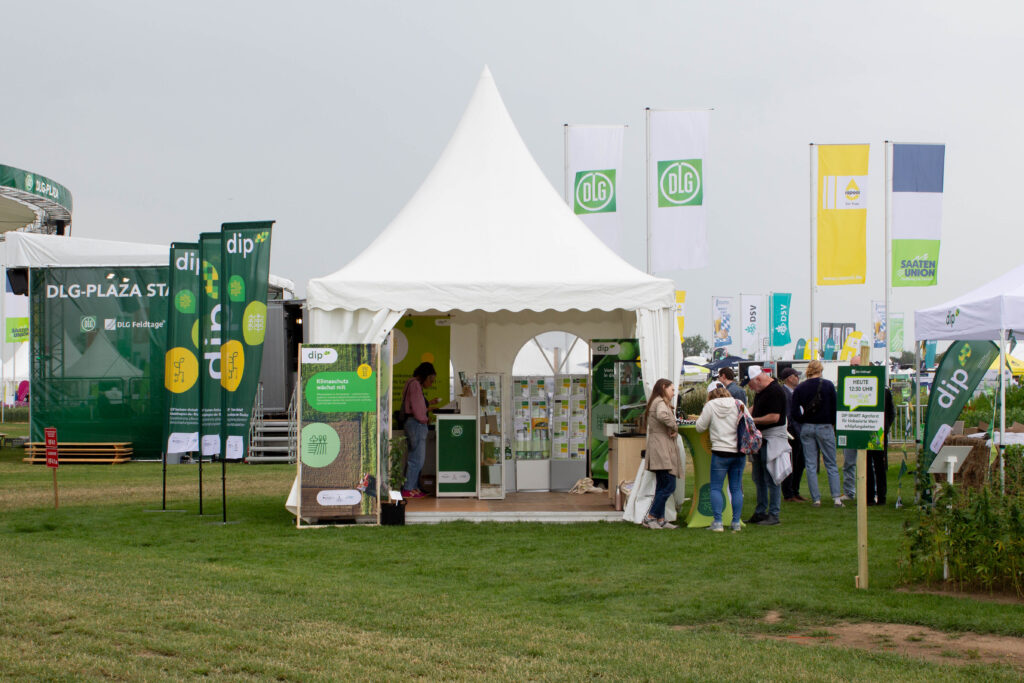
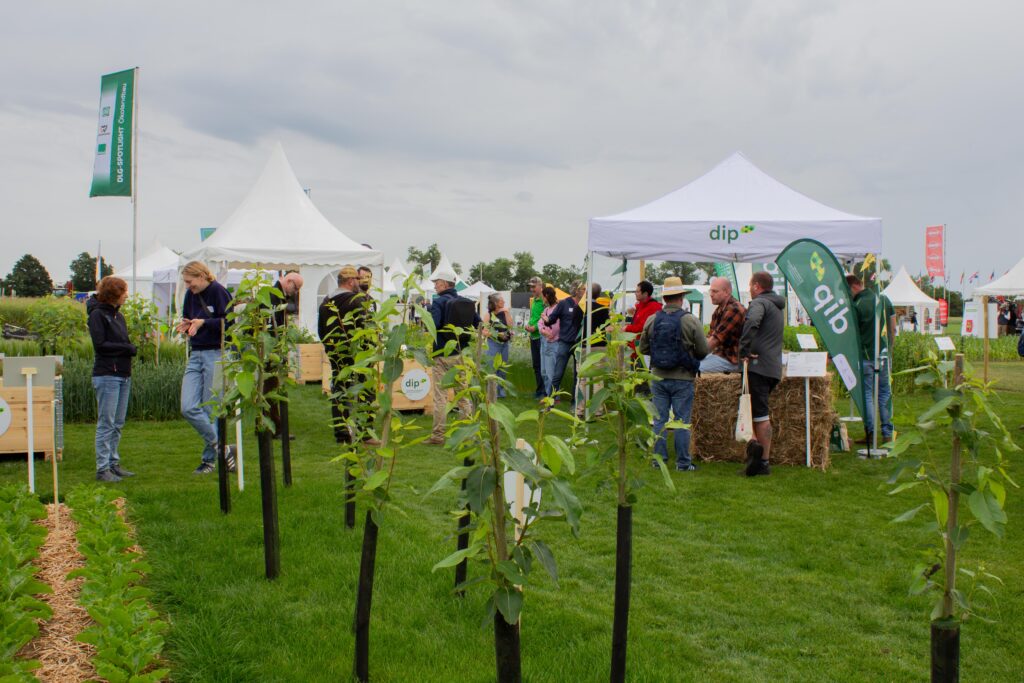
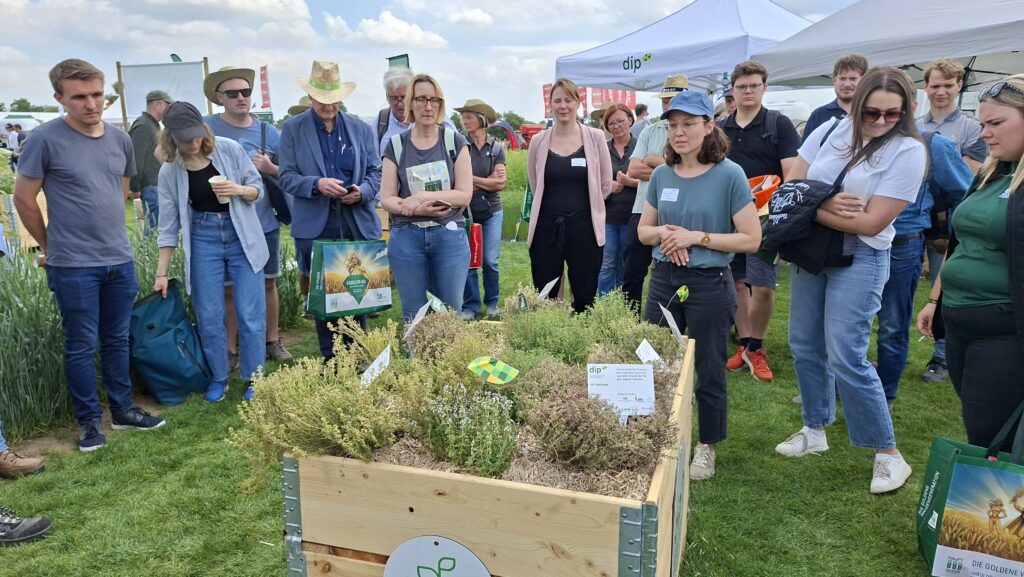
For the first time, the DiP network was represented with its own booth in the test field (booth VF41). Together with numerous project partners, DiP showed directly on site how research is created along plant value chains – from plant breeding to cultivation and processing to new applications for industry, the healthcare industry and the regional bioeconomy.
Showing research where agriculture shapes the future
The DLG Field Days are among the most important meeting places for agriculture, plant breeding and agricultural research in Germany. For DiP, the event in the middle of its own model region offered the ideal platform to make research directly visible in the agricultural environment and to talk to farmers, companies, politicians, advisory services and interested visitors.
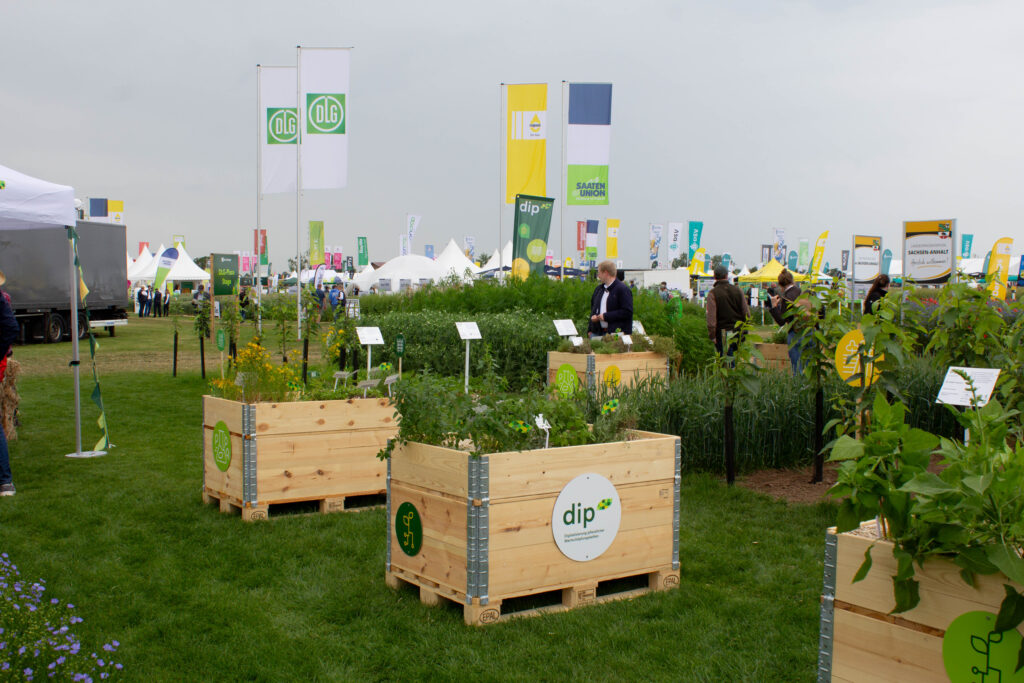
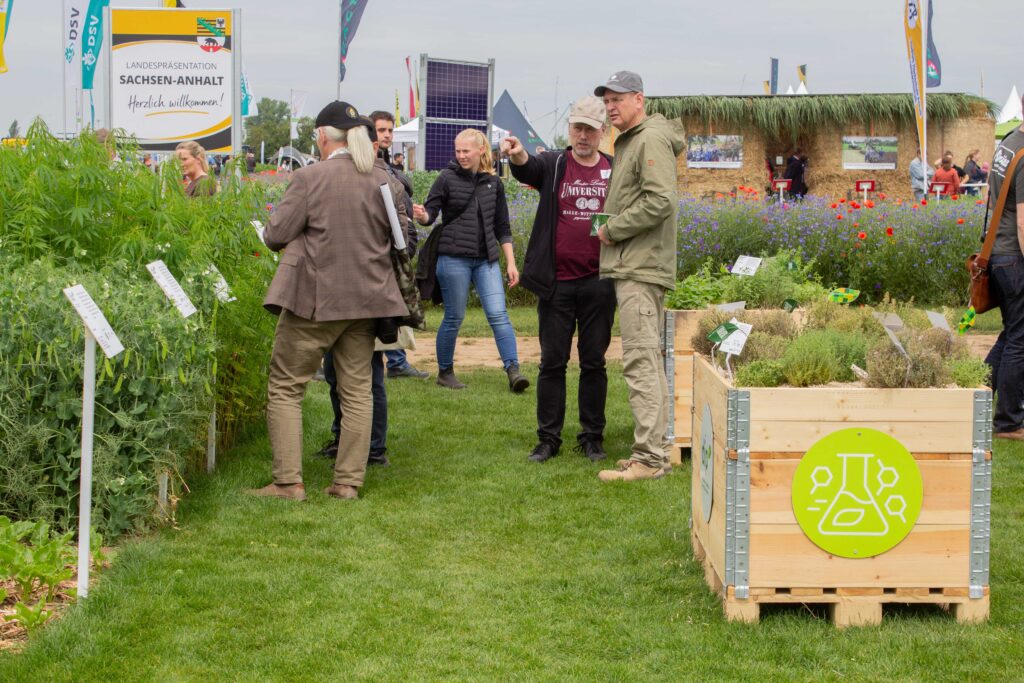
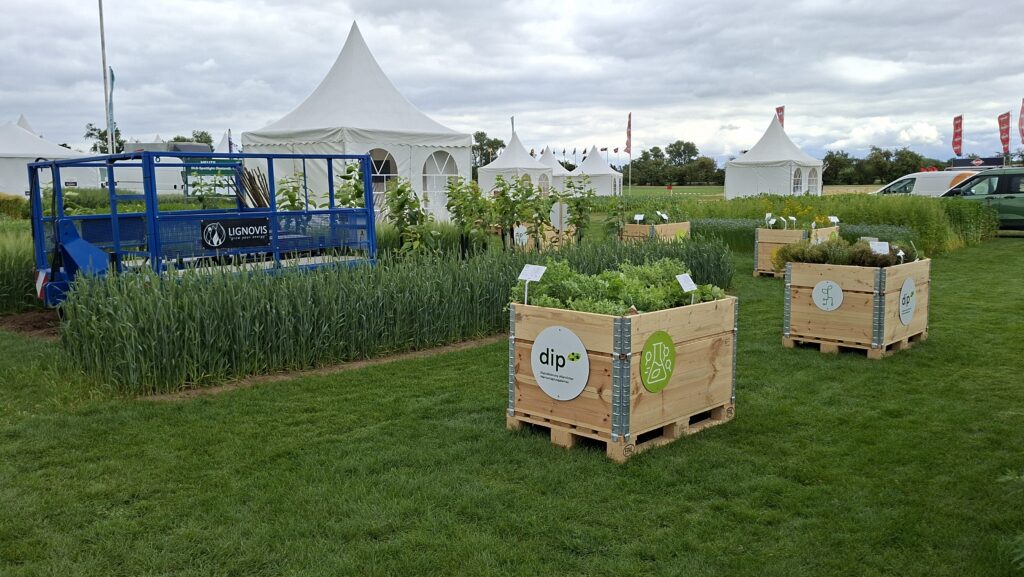
On all three days of the fair, the focus was on different topics. Three compact pop-up talks, interactive exhibits in and around the pagoda, as well as living experimental plots and herb show beds offered numerous points of contact for the professional exchange between research and practice.
The highlights from the test field
1. Agroforestry: Digitization for sustainable cultivation systems
The kick-off was the pop-up talk “Agroforestry digitally thought” of the DiP-SMART Agroforestry project on 16 June. The focus was on the question of how agroforestry systems can contribute to climate-resilient agriculture and regional value chains.
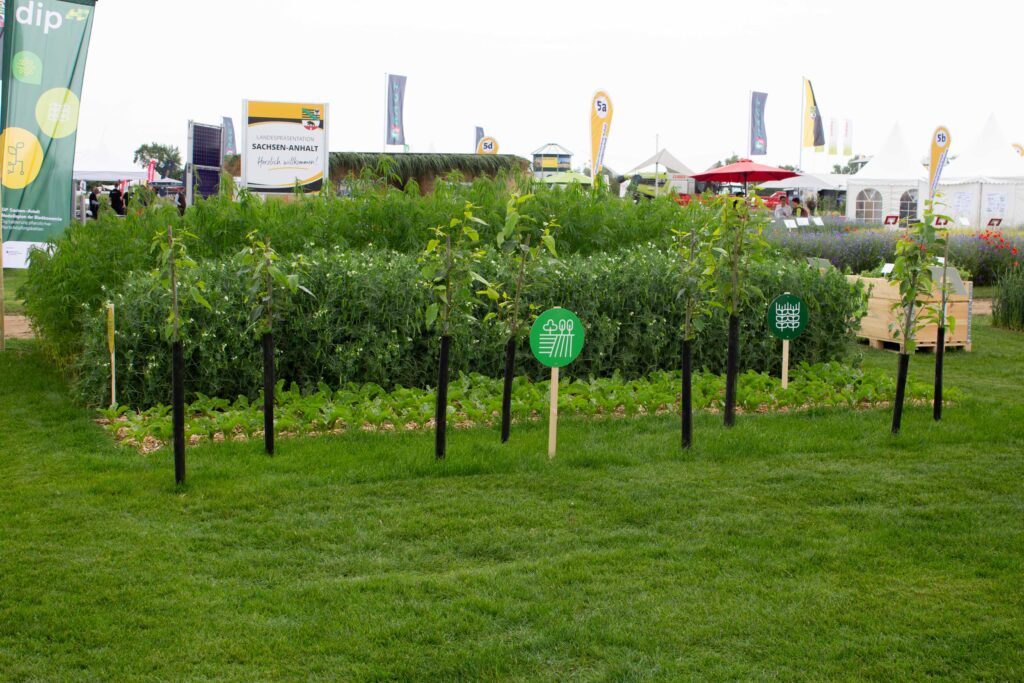
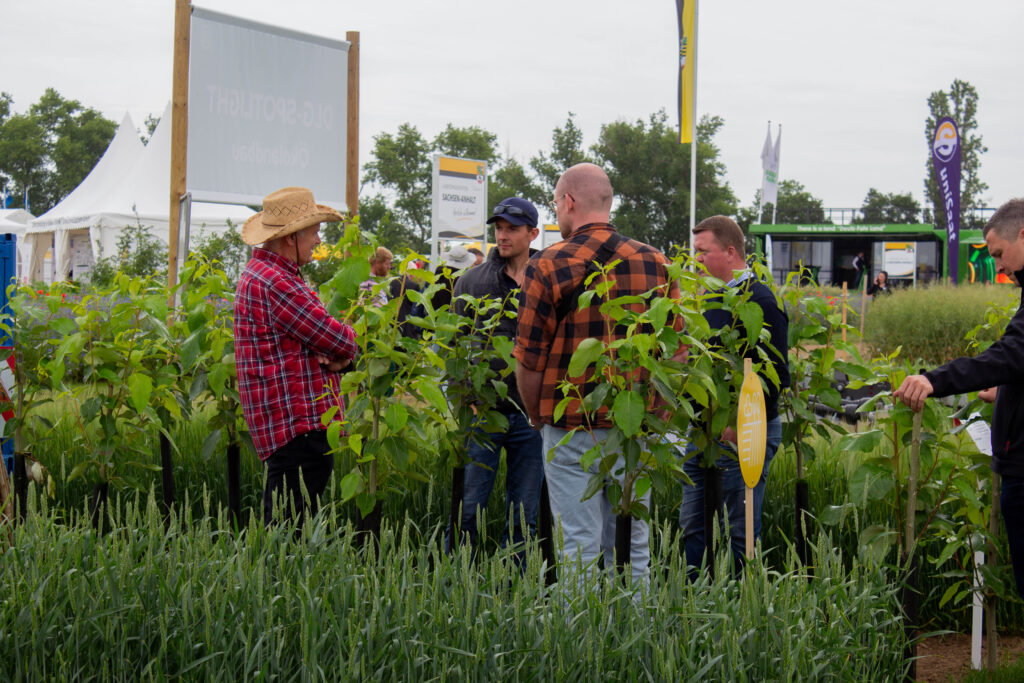
In the talk as well as on the trial plot with poplar cuttings and a planting machine from the practice partner Lignovis, it was demonstrated, among other things, how digital tools support farmers in identifying suitable areas for agroforestry systems and at the same time planning new recycling routes for the wood produced. This made it clear how ecological services and economic prospects can be combined.
2. Medicinal and aromatic plants: climate-fit varieties for new markets
On 17 June, the focus was on medicinal and aromatic plants. The DiP-OptiLamia and DiP-NA-WIR projects presented how digital breeding approaches and artificial intelligence contribute to adapting the cultivation of marjoram, sage, thyme and other medicinal and spice plants to changing climatic conditions and to linking the establishment of new, more climate-stable crops, such as rosemary, with the production of new high-quality active ingredients.
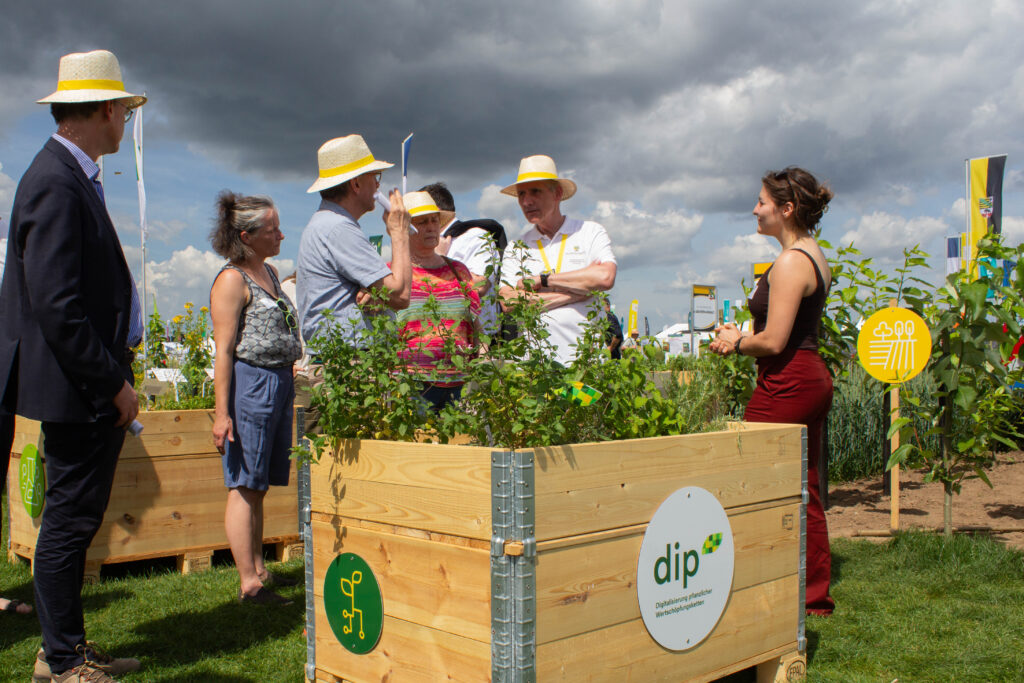
Visitors were able to explore the cultures directly on living plants in raised beds. At the same time, it was explained how genomic methods and AI-supported analyses will help to develop climate-adapted varieties in the future and determine the optimal harvest time for high active ingredient contents. This opens up new perspectives for regional value creation and innovative applications of plant-based ingredients.
3. Healthy pea, strong harvest
The third day of the fair was dedicated to grain peas. In the pop-up talk “Healthy pea, strong harvest”, the DiP-DiPisum project together with the Julius Kühn Institute (JKI) presented current results of resistance research.
The focus was on soil-borne diseases such as Fusarium and their effects on pea cultivation. Using laboratory samples and the immediately adjacent experimental plots, it was vividly shown how modern genome research and plant breeding contribute to enabling more resistant varieties and more stable yields for domestic protein production in the long term.
Research in dialogue
In addition to the pop-up talks, the DiP booth offered numerous opportunities for personal exchange on all three days. Researchers from Martin Luther University Halle-Wittenberg, the Julius Kühn Institute (JKI), the Leibniz Institute of Plant Biochemistry (IPB), the Leibniz Institute of Plant Genetics and Crop Plant Research (IPK) and other partner institutions explained their work and discussed current challenges and future prospects of the bioeconomy with the visitors. As part of a survey conducted by the Helmholtz Environmental Research Centre (UFZ), the trade visitors were also able to help design concrete visions of the future in which plant-based value creation provides sustainable impetus across industries.
Other DiP projects presented research results on the plots:
- of digital applications in sugar beet cultivation (DiP-ZAZIkI),
- on alternative oil plants (DiP-SuSaKlim),
- simulated field borders for more biodiversity (DiP-FaiReSyst),
- AI-supported quality assessment and resilient cultivation systems for industrial hemp (DiP-iQ hemp),
- the use of plant side streams (DiP-Tres2Cera)
- the innovative development of a vegan source of vitamin D3 (DiP-DiPlanD)
- to the digitally supported expansion of the St. John’s wort value chain (DiP-HyperSpace).
Together, it became clear how diverse the approaches within the network are and how they pursue the common goal of opening up new plant value chains for a sustainable bioeconomy as drivers of a comprehensive economic transformation in Saxony-Anhalt.
Successful appearance at the DLG Field Days
The joint trade fair appearance of the DiP network met with great interest. Numerous visitors took the opportunity to find out about current research work, ask questions and talk to the scientists.
The intensive exchange shows how great the need for digital solutions, climate-adapted cultivation systems and new bioeconomic value chains is in practice. The DLG Field Days provided the ideal setting for this: research could be experienced directly in the test field and discussed where its results will be applied in the future – in exchange with agriculture, processing industries and practice. With its joint appearance at the DLG Field Days, the DiP network once again presented itself as a central competence hub for research on the digitalised plant bioeconomy in Saxony-Anhalt.